The Area Guide
Living in Tehachapi: straight answers
Researching a move to the Tehachapi mountains? These are the questions relocating buyers actually ask, answered the way Sarah answers them on the phone — directly, then with the detail that matters. No brochure gloss.
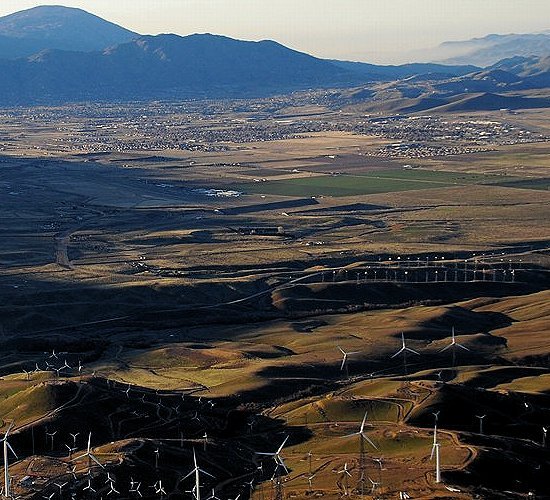
What is it like living in Tehachapi year-round?
Tehachapi sits at roughly 4,000 feet in the mountains between Bakersfield and the Mojave Desert, so you get four real seasons: genuine snow days most winters, springs and falls that earn the postcard, and summers noticeably cooler than the valley floor below. The other constant is wind — the Tehachapi Pass is one of the windiest places in California, which is why one of the country's oldest and largest wind farms lives here. Locals plan around it; buyers should tour with it in mind.
The practical version: winter means owning a snow shovel and occasionally waiting out a morning before the roads clear; summer evenings cool off in a way Bakersfield's don't; and wind exposure varies enormously parcel to parcel — a home tucked into a lee can live in a different climate than one on an exposed ridge a mile away. It's one of the first things Sarah evaluates on a showing, along with snow line and road access for the specific street. The reward for the weather is the setting: mountain light, working ranches, the famous Tehachapi Loop down the hill, and night skies the valley never sees.
How do Bear Valley Springs, Stallion Springs, Golden Hills and in-town differ?
They differ mainly in land, access and services. Bear Valley Springs is a large gated community with its own services district, amenities and equestrian-friendly acreage behind the gate. Stallion Springs is a master-planned mountain community with its own community services district and larger parcels on winding terrain. Golden Hills is unincorporated, ungated and sits right off Highway 58 with some of the area's quickest commute access and a wide mix of parcel sizes. In-town Tehachapi runs on city water and sewer with smaller lots and walkable streets.
Those four are the headline areas, but not the whole map — smaller pockets like Oak Knolls, Alpine Forest and the ranch land along the valley floors each have their own character and rules, and Sarah covers all of them. The governance details differ too: Bear Valley Springs pairs its association (amenities, dues) with a separate community services district for police, roads and water; Stallion Springs' services district runs the pool, parks and its own police department and enforces the community's recorded CC&Rs; and Golden Hills has had its own services district since 1966 for water and parks, with most roads maintained by Kern County. The right answer depends on three questions: how much land you actually want to maintain, how you feel about gates and association rules, and what your commute needs to be. Each community trades those differently — and the same budget buys meaningfully different property in each. Sarah's neighborhood-fit conversation is exactly this comparison, grounded in what's actually for sale when you're looking. How buying works up here →
What does commuting from Tehachapi look like?
Highway 58 is the artery. Bakersfield is roughly 40 to 45 minutes from town heading west and downhill; Mojave is about 20 to 25 minutes east; Edwards Air Force Base typically runs 45 minutes to an hour via 58; and Lancaster or Palmdale ride 58 to Highway 14 south. Two realities to plan for: winter storms can bring chain controls or short closures on the pass, and the grade adds wear that flatland commutes don't.
Where you live in the area changes the math — Golden Hills can shave real minutes off a westbound commute versus the far side of the gated communities, and that difference compounds daily. Many buyers treat the commute as the price of the elevation: cooler summers, real seasons and dark skies on one side of the ledger, the pass on the other. Sarah maps the actual door-to-door drive for any property you're serious about.
Do properties here have wells and septic? What should buyers check?
Many rural properties around Tehachapi are on private wells and septic systems, while in-town homes are generally on city water and sewer, and some communities have district water. None of that is a problem — it's simply due diligence: a well deserves a production and recovery test plus a water-quality check, a septic system deserves a pumping and inspection, and propane service (common up here) means confirming whether the tank is owned or leased.
The mistake out-of-area buyers make is treating these as exotic. They're routine here — what matters is doing the specific inspections in the contingency window and pricing any findings into the deal. Sarah walks buyers through exactly which systems a property has and what each inspection should cover before an offer is written — it's half of what "local agent" means in a rural market.
How do HOAs and gate access work in the gated communities?
The structures differ by community. In Bear Valley Springs you pay an annual association assessment — $2,052 for the 2024–25 year, billed each July — which funds the amenities, while police, roads and water run through a separate services district on the property-tax bill. Most of Stallion Springs has no monthly HOA bill at all: its services district is funded through property taxes plus a voter-approved $50-a-year police parcel tax, and the district itself enforces the community's recorded CC&Rs, though a few small pockets carry their own private HOA dues. Golden Hills generally has neither gate nor association dues. Assessments move with budget years, so Sarah confirms the current figures for any specific property.
Gate access in Bear Valley Springs runs through resident authorization — guests, deliveries and showings are all manageable, just planned rather than spontaneous. The durable advice: read the rules for the thing you actually plan to do with the property before you fall for the property. A buyer with horses, a home business, or an RV has different rulebooks to check — and it takes Sarah about a day to get current answers for a specific address.
What should I know about buying horse property here?
Horse property here is judged on usable acreage, not paper acreage — flat or gently sloped ground you can actually fence, ride and build on. The checklist that drives value: water (well output or district service), existing fencing and its condition, outbuildings and their permits, zoning and any community rules on animals, and trail or arena access. For calibration as of mid-2026, listing portals put Tehachapi-area horse properties anywhere from the mid-$300,000s for a small ranchette to seven figures for a developed equestrian estate in Bear Valley Springs, with raw-land averages quoted roughly $40,000 to $65,000 per acre depending on usability and water.
Two parcels with identical acreage can serve horses completely differently — a steep, rocky five acres is a view lot; a flat, fenced five acres with water is a working property. That's why Sarah walks the land, not just the house, and why the listing pages on this site lead with usable-land facts instead of romance copy. See the current featured listing →
Ask the question that isn't answered here
This guide covers what most relocating buyers ask first. For the question specific to your situation — call or text Sarah, or get exact-match MLS alerts for the area you're watching.